Entradas

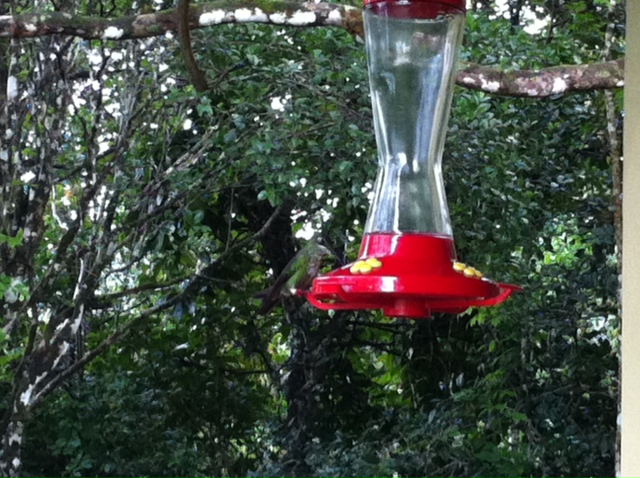
Yellow-throated Euphonia at Chicá

Imagen
Jennifer Wolcott shares this photo of what looks pretty much like a male Yellow-throated Euphonia . Problem is, the bird was seen at Chicá, over 250 km west of the species' known range. But, hey, stranger things have been known to happen happened. The bird was photographed on Sunday, October 14, at the feeders at La Joya de Chicá B&B. If you swing by to look for this rarest of Panama euphonias, try and get a female.

The Juan Hombrón Long-winged Harrier in Photos

Imagen
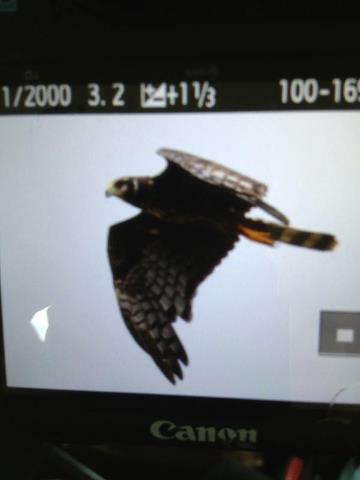
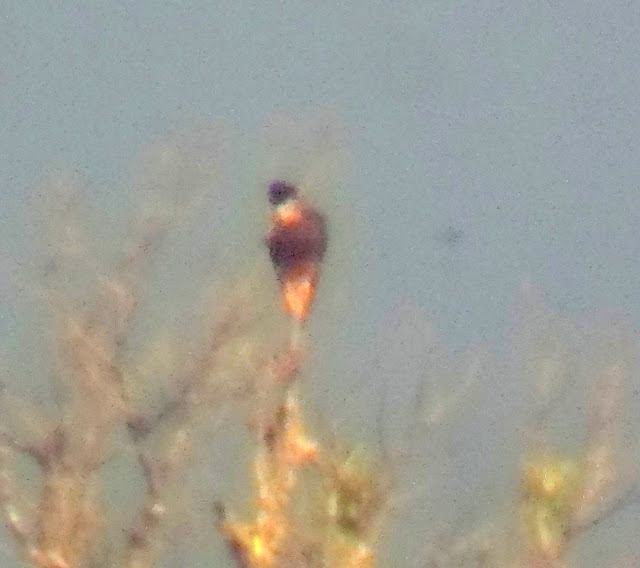
Rafael Luck sent in his photos of the Long-winged Harrier his group (which included Venicio Wilson, Osvaldo Quintero and Jan Axel Cubilla) found in Juan Hombrón yesterday. Comparing the photos with the poor illustrations of the species in South American field guides, and having never seen the species ever, I'd say this is a young dark morph adult (fide the few pale streaks in the underparts). They also had this American Golden-Plover at the same location and later encountered a Northern Harrier in El Coco, for comparison.

Long-winged Harrier at Juan Hombrón

Imagen
This Long-winged Harrier , apparently a dark-phase adult, was photographed yesterday at Juan Hombrón, Coclé: about 100 km west of the westernmost previous records from Tocumen Marsh.  En estos momentos estamos recibiendo reportes de que en la carretera que va a Juan Hombrón, en el área de arrozales, se está observando un Long-winged Harrier. Otras aves vistas incluyen varios Pectoral Sandpipers y un American Golden-Plover . Observadores: Beny Wilson Altamiranda, Rafael Luck, Osvaldo Quintero y Jan Axel Cubilla Rodríguez. More details to come.

Jottings from Altos Del María, a report by Michael Froude

Imagen
The following miscellaneous observations may be of interest. The first hummingbird I saw using my newly-installed feeder, on 3 September, was a Long-billed Starthroat. It has returned several times since, though Rufous-tailed now dominate. On one occasion the gorget showed clear lateral projections, befitting the name Starthroat better than the illustration in Angehr. On 12 October I saw a male Purple-throated Mountain-gem at Monte Azul, at about 1000m. Blue cap, purple gorget and white post-ocular stripe were all clear in direct sunlight. This extends the range stated by Angehr a little to the east. On 9 October, at Valle Bonito, five small birds foraging on or near the ground took to the trees on my approach, revealing yellow rumps and flanks. I could not get a definitive sighting but Yellow-rumped Warbler would appear to be only possible identification, in which case they were a full month earlier than the period stated by Angehr. Blackburnian Warbler have been more numerou...

Western Kingbird at Naos

Richard Cooke reports seeing a Western Kingbird yesterday afternoon at the parking lot of the STRI Marine Lab at Naos Island, on the Amador Causeway. Even without binoculars, he could see the white outer rectrices. He also noted the olive wash on the chest extending further into the belly than on the typical Tropical Kingbird. What first called his attention to the bird was its unusual behaviour: skulking in a bush.

Black-whiskered Vireo at San Lorenzo

Imagen
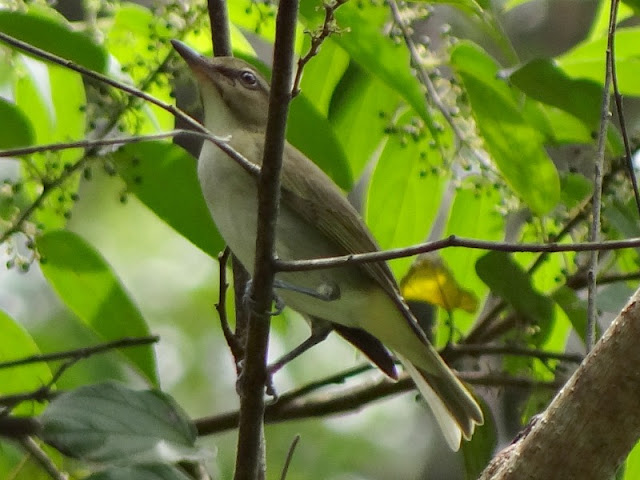
Suzanne Osier photographed this Black-whiskered Vireo today on San Lorenzo Road, close to the entrance of the National Park. It was in a mixed flock with Red-eyed Vireo, Blue Dacnis, Shining Honeycreeper and a female Golden-collared Manakin.

[Western] Willet at Panamá Viejo

Imagen
Itzel Fong Gadea photographed this [Western] Willet at Panamá Viejo, on September 2.

The Panama Viejo Gray-hooded Gull: now with video

Imagen
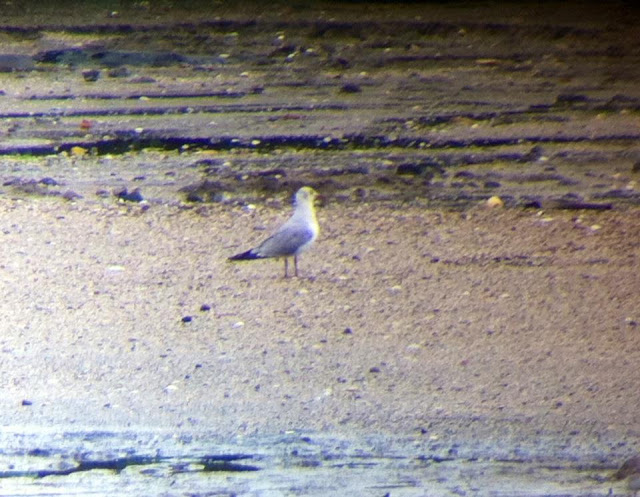
Leslie Lieurance shares his footage of the Panama Viejo  Gray-hooded Gull shot the day it was found, July 13.

Gray-hooded Gull still at Panama Viejo, a report by Rosabel Miró

Imagen
Gray-hooded Gull , vista el domingo 29 a las 2:00 pm en Panamá Viejo, en la arena que lleva a la islita detrás del Centro de Visitantes. La buena noticia es que todavía está en el área. UPDATE: Karl Kaufmann adds: Here's some photos of the Gray-headed Gull that Rosabel found at Panama Viejo on Sunday July 29. It looks like a 2nd year or non-breeding adult to me.

Green-crowned Brilliant in Cerro Azul

Imagen
Rosabel Miró shares this photo of a female Green-crowned Brilliant at her feeder in Cerro Azul this morning.

Gray-hooded Gull in Panama Viejo, a report by Leslie Lieurance

Imagen
Bob Behrstock, Cindy and I were standing close to the visitor center at Panama Viejo looking through the birds brought in by the high tide around 11 am on Friday the 13th. Cindy looked in the direction Bob was looking when he asked for the scope and saw a gull with red bill and legs. Very quickly Bob said it had characters consistent with Gray-hooded Gull which he has seen in Ecuador. Cindy and I have never seen this species. It had a more rounded head and was more robust looking than the few Laughing gulls present. Behind the light eye there was a black smudge on the edge of a faint dark hood which ran up around the crown. In flight there was a white slash across the dorsal black primaries. The underwing was dark. Bob pointed out the nape was white while the few Laughing Gulls present had gray napes. We made some phone calls and Carlos Betheancourt responded to see the bird some minutes later. The bird appeared comfortable in the location even while being disturbed by...

Northern Veraguas: a report by Lider Sucre and Venicio Wilson.

Imagen
From June 23rd to 27th, Betsy Farah Morán, Julie Payne, Lider Sucre and Venicio Wilson visited the northern coast of Veraguas thanks to a very kind invitation by Alexander Risse who is developing an ecological resort by the small Estero Salado river, not far from Guázaro. According to some sources, the area is perhaps the rainiest lowland rainforest of Panama with over 7,000 mm of rain per square meter per year. This amount of rain and the lack of access points to it, had kept the forest and the area relatively isolated until recently. The Directory of Important Bird Areas in Panama mentions that “The area is poorly known ornithologically” and that “additional surveys are high priority”. The first surprise of this place was the evident presence of foothill plants and birds species at sea level, apparently enabled by the ever-wet conditions and perhaps milder temperatures. Here is a list of the most remarkable findings of this birding adventure: Wood Storks: At our arrival we saw 37 ...