Entradas

The Panama Viejo Gray-hooded Gull: now with video

Imagen
Leslie Lieurance shares his footage of the Panama Viejo  Gray-hooded Gull shot the day it was found, July 13.

Gray-hooded Gull still at Panama Viejo, a report by Rosabel Miró

Imagen
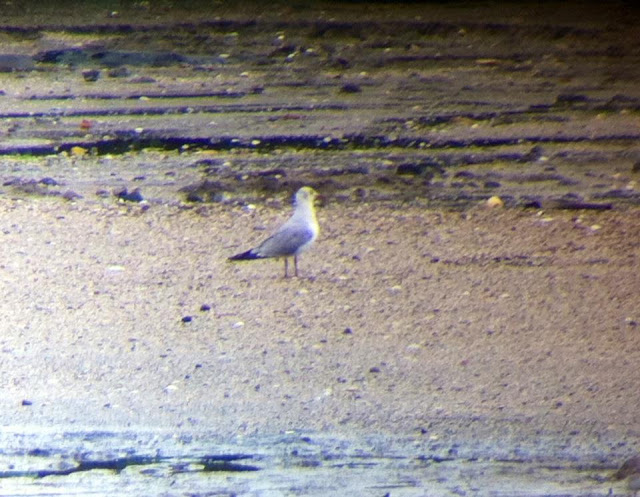
Gray-hooded Gull , vista el domingo 29 a las 2:00 pm en Panamá Viejo, en la arena que lleva a la islita detrás del Centro de Visitantes. La buena noticia es que todavía está en el área. UPDATE: Karl Kaufmann adds: Here's some photos of the Gray-headed Gull that Rosabel found at Panama Viejo on Sunday July 29. It looks like a 2nd year or non-breeding adult to me.

Green-crowned Brilliant in Cerro Azul

Imagen
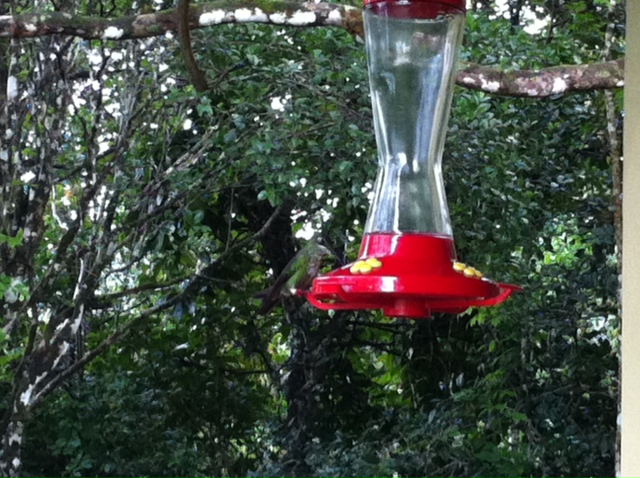
Rosabel Miró shares this photo of a female Green-crowned Brilliant at her feeder in Cerro Azul this morning.

Gray-hooded Gull in Panama Viejo, a report by Leslie Lieurance

Imagen
Bob Behrstock, Cindy and I were standing close to the visitor center at Panama Viejo looking through the birds brought in by the high tide around 11 am on Friday the 13th. Cindy looked in the direction Bob was looking when he asked for the scope and saw a gull with red bill and legs. Very quickly Bob said it had characters consistent with Gray-hooded Gull which he has seen in Ecuador. Cindy and I have never seen this species. It had a more rounded head and was more robust looking than the few Laughing gulls present. Behind the light eye there was a black smudge on the edge of a faint dark hood which ran up around the crown. In flight there was a white slash across the dorsal black primaries. The underwing was dark. Bob pointed out the nape was white while the few Laughing Gulls present had gray napes. We made some phone calls and Carlos Betheancourt responded to see the bird some minutes later. The bird appeared comfortable in the location even while being disturbed by...

Northern Veraguas: a report by Lider Sucre and Venicio Wilson.

Imagen
From June 23rd to 27th, Betsy Farah Morán, Julie Payne, Lider Sucre and Venicio Wilson visited the northern coast of Veraguas thanks to a very kind invitation by Alexander Risse who is developing an ecological resort by the small Estero Salado river, not far from Guázaro. According to some sources, the area is perhaps the rainiest lowland rainforest of Panama with over 7,000 mm of rain per square meter per year. This amount of rain and the lack of access points to it, had kept the forest and the area relatively isolated until recently. The Directory of Important Bird Areas in Panama mentions that “The area is poorly known ornithologically” and that “additional surveys are high priority”. The first surprise of this place was the evident presence of foothill plants and birds species at sea level, apparently enabled by the ever-wet conditions and perhaps milder temperatures. Here is a list of the most remarkable findings of this birding adventure: Wood Storks: At our arrival we saw 37 ...

Mixed bag

Imagen
Euclides Campos sends in some noteworthy records from the first half of 2012. A White-eyed Vireo  was seen at Bayano Lake on February 16th. This bird was calling.  On February 25th, leading a group at Las Lajas Beach, Chiriqui; We saw a hundreds of Blue-winged Teal, three American Wigeon and my lifer, a male Cinnamon Tteal . This bird was seen through three scopes. We managed to take some shots but not so well. Yellow-bellied Tyrannulet : heard at Cuesta de Piedra on February 27th 2012. Sounds like the other Ornithion we have in Panama but slightly different. On June 1th, a pelagic trip using the hot spring trail of Coiba Island as a starting point, 32 miles SSE. We saw two Wedge-tailed Shearwaters , one Sooty Shearwater, two Black, three Least Storm Petrel, two Nazca Boobies , eight Parasitic Jaegers and plenty of Wedge-rumped Storm Petrels.

Rarities and Anomalies in Parque Internacional La Amistad, a report by Michael Froude

A spontaneous visit to the Cerro Punta area in late April yielded the following notable observations in Parque Internacional La Amistad. On 29 April, near the lowest point on Sendero El Retoño, at about 2170m I had an extended intermittent sighting through tangled foliage of a Streaked Xenops , behaving very similarly to the familiar Plain Xenops, including hanging upside down. I noted the obvious streaking, supercillary and malar stripes of the same colour compared with those of different colour of the Plain Xenops and with the supercillary only of the larger Ruddy Treerunner seen the previous day, also hanging upside down. I had another brief sighting of Streaked Xenops (maybe the same one) the following day in tangled foliage just below the park entrance, at about 2100m. These altitudes are higher than the range quoted by Angehr. At the spectacular cascade which is the destination of Sendero La Cascada, at about 2400m, on 30 April, I saw an Ochraceous Pewee , on an exposed perch ...

More Avocets at Aguadulce

Imagen
Venicio Wilson found a flock of eight American Avocets at Salinas de Aguadulce on May 15. These are different birds from the ones at Costa del Este, which are still hanging around.

The Costa del Este Avocets

Gwen Keller went shorebirding at Costa del Este yesterday afternoon and as the tide was coming in she spotted maybe 30+ Marbled Godwits, 9 American Avocets , some with rufous plumage, and a number of short billed dowitchers among the usual cast of characters.

Capped Heron at Summit Gardens

Imagen
Marianne Akers found this Capped Heron yesterday at Summit, wading in the crocodile pond (no crocodile present).

mixed bag: red-billed tropicbird, Veraguan Mango and more; a report by Kees Groenendijk

Imagen
Kevin Easley and some other avid birders from Costa Rica visited the Western Azuero and Coiba with me. On 3 May we went to Changuale (East of las Flores) to try and find the Azuero parakeet. Wer did not find it, but saw many King Vultures circling above us while walking along the Pavo river.  We left for Coiba on 4 May. Between Santa Catalina and Coiba we saw Red-necked Phalaropes , Brown Noddies , a juvenile Red-billed Tropicbird and a Parasitic Jaeger . On the Las Pozos trail on Coiba we found the Coiba Spinetail and the Brown-backed Dove . There was also a male Indigo Bunting in breeding plumage (The Angehr guide does not mention that Indigo Buntings occur on Coiba). Furthermore, for the last three weeks, our hummingbird feeders are daily visited by a juvenile mango. I have attached a (small) picture of the bird. I think it is a Veraguan Mango .

That heron? Probably not a Lava Heron after all.

Panama Records Committee Chair George Angehr chimes in on Venicio’s odd Butorides from Las Bóvedas : Interesting bird. However, I showed it to heron expert James Kushlan and he said that Lava Heron has a thicker bill and thicker legs. Photos on line also seem to show that Lava Heron has a yellow eye. Kushlan thought it was just a melanistic Green/Striated.