Entradas

Mostrando las entradas con la etiqueta peg-billed finch

Peg-billed Finch at El Respingo

Imagen
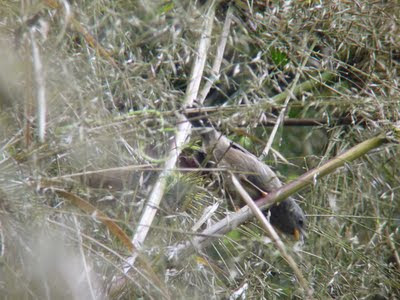
Rafael Lau and Genover Santamaría had a Peg-billed Finch at the seeding bamboo along the first part of El Respingo road on February 5. He also filmed it: On related news, Euclides Campos found Peg-billed Finch and Barred Parakeet on the bamboo at the entrance to Los Quetzales Trail on February 6.

Peg-billed Finches and seeding bamboo, a report by Kees Groenendijk

Imagen
On 9 September I walked up to about 3100 m on Volcan Baru. At around 3000 m I saw a Costa Rican Pygmy-Owl being mobbed by Peg-billed Finches and a Fiery-throated Hummingbird. A bit further up, at around 3100, the bamboo was seeding and there were plenty of Peg-billed Finches and Large-footed Finches feeding.

Chiriquí Report, by Ken Allaire

Just wanted to pass on a couple of the better sightings of the last few very rainy days in the Volcan area. At Finca Hartmann on 25/8 I found a Stripe-breasted Wren , I think a bit more than halfway up to Ojos de Agua, the first good pathc of forest I encountered en route. When I heard the bird it struck me as odd for the area, without really thinking about its usual range, so I employed playback, and the bird came in immediately and lingered for a minute or so, not 3m away. I collected audio of its response to playback, which will be posted on xeno-canto when I return home. I believe this would be a first record for Chiriqui- I'm hard-pressed to explain this, but anecdotal evidence from the Hartmann family suggests that heavy rains in the area drive some species to different locations, possibly explaining the wren's foray onto the Pacific slope. Also excellent for the area was a Bronzy Hermit , which came in to a plaintain tree as I was taking a bathroom break, of all t...
Live from Cerro Punta

All week we will be on location in Cerro Punta an environs investigating the reports of seeding bamboo and hoping to run into those pesky seeding bamboo followers: Peg-billed Finch, Barred Parakeet, and Maroon-chested Ground-Dove. Since blogger's iPhone interface sucks (i.e. It doesn't have one), we will be posting mostly on Twitter. @xenornis. Go ahead, follow us. But here's what we have so far: yesterday morning I walked up to the grounds of Los Quetzales cabins and found two big patches of bamboo. The first one was completely devoid of birds, but the second had a flock of at least four Peg-billed Finches, foraging and calling. No adult males were seen, just female-plumaged birds. Also seen were Green-fronted Lancebill and Scaly-throated Foliage-Gleaner (shamebird no more). Today I went with Jan Axel Cubilla and Gloriela Archbold to PILA Las Nubes, where we found lots of bamboo but no bamboo followers. After lunch, and after Jan Axel and Gloriela had headed back to ci...

Peg-billed Finch, etc. in PILA

Imagen
Euclides Campos spent a couple of days birding La Amistad International Park. The highlight for October 7 was a pair of Green-fronted Lancebills seen at El Retoño trail. Things turned for the best on October 8, with Ochraceous Pewee, a male Peg-billed Finch (feeding on the seeding bamboo two meters overhead), and a few Slaty Finches. Also recorded were Ornate Hawk-Eagle and a few Purple-throated Mountain-Gems and Barred Parakeets.

Peg-billed Finches at Cerro Punta

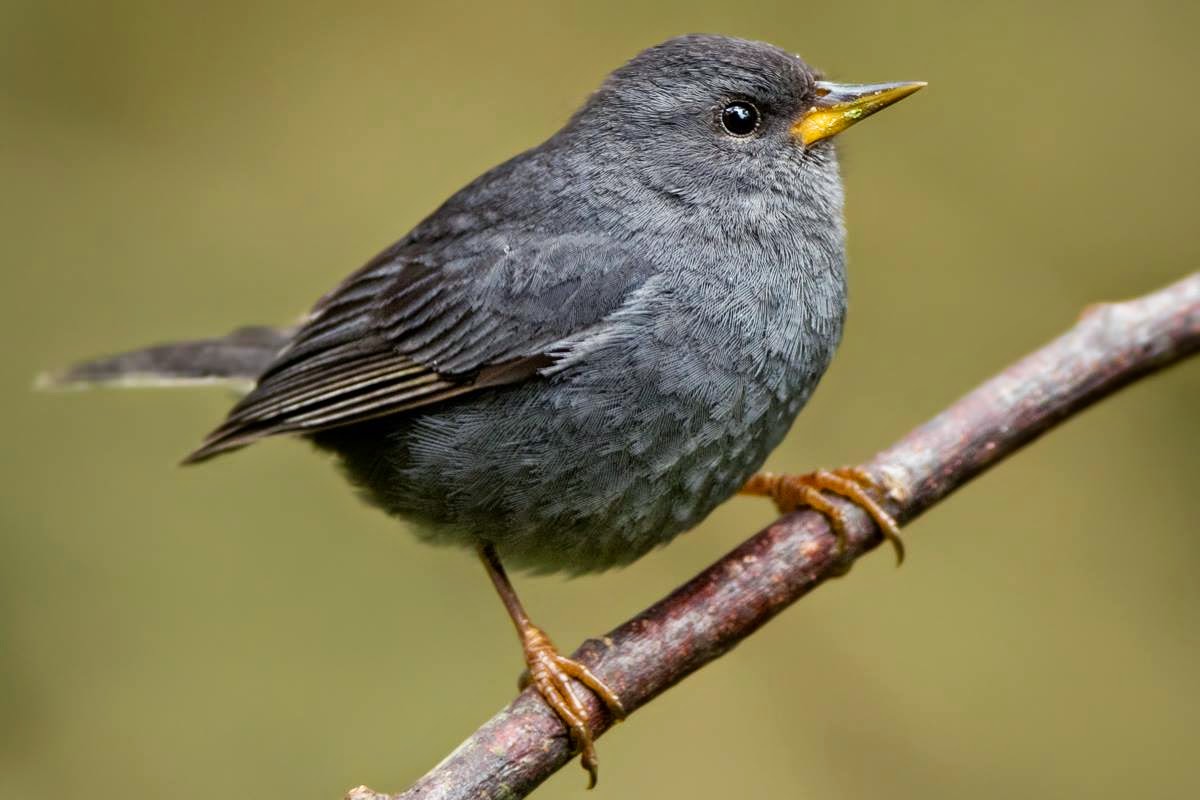
Two Peg-billed Finches were seen by Delicia and Darién Montañez on the trail to the waterfall at Parque Internacional La Amistad in Las Nubes, Cerro Punta. The first one, a male, responded to pishing at the first platform (about 100 meters before 'La Nevera'). At first it was assumed to be yet another Slaty Flowerpiercer, but its straight, conical bill with a horn-colored mandible indicated otherwise. It was slate-gray all over, slightly darker on the head and paler below, and there was definitely some yellow on the legs and (especially) around the toes, like the legs of a male Blackpoll Warbler in winter plumage. As we scrambled down the muddy trail we found a second bird, this time a female. Same bill, olive-brown above, buffier below with noticeable dusky streaks in the chest and two clear buffy wingbars. The female was also quite responsive to pishing and was (thus) observed at close range (a meter at most) as it called from a tangle on the left bank of the trail. Further d...