Entradas

Mostrando las entradas con la etiqueta ring-necked duck

Mixed bag of records, a report by Rosabel Miró

Imagen
Enero 30, 31 y 1 de febrero Un macho Lesser Scaup y lo que parece ser una hembra Ring-necked Duck fueron observados en un laguito ubicado en el centro de la isla Contadora, archipiélago de Las Perlas. Durante los 3 días que observamos estos patos, siempre estuvieron juntos, como si fueran parejas (¿será una híbrido?). Eran los únicos patos del lago, donde habían no menos de 30 Least Grebes. Observadores: Rosabel Miró y Karl Kaufmann. En otro lago, en un costado de la pista de aterrizaje, cerca del antiguo hotel Contadora, escuchamos tanto el 31 de enero como el 1 de febrero a los White-throated Crakes, en varias partes de ese lago. (Foto de Rosabel) Sábado 7 de febrero Antes del Censo Centroamericano de Aves Acuáticas Una Whistling Heron en la arrocera de Santa María, Herrera, cerca de la entrada del pueblo de El Rincón. Esta garza estaba junto con otras garzas locales. Observadores: Yenifer Díaz, Alberto Bethancourt, Roxana Alveo y Stephany Carty. (No sacamos fotos). Dura...

Ring-necked Duck at Lago Calamito, a report by Howard Laidlaw

Imagen
I had a Ring-necked Duck at Lago Calamito, Panama Rainforest Discovery Center on the afternoon of Sunday, January 11. Was with the continuing Masked Ducks . Lousy photos but the pale eyering and white ring on the bill can be seen. Not sure of its newsworthiness but there are still 2 American Wigeons hanging around at Gamboa Rainforest Resort Marina.

Cinnamon Teal at Chame, a report by Euclides Campos.

Imagen
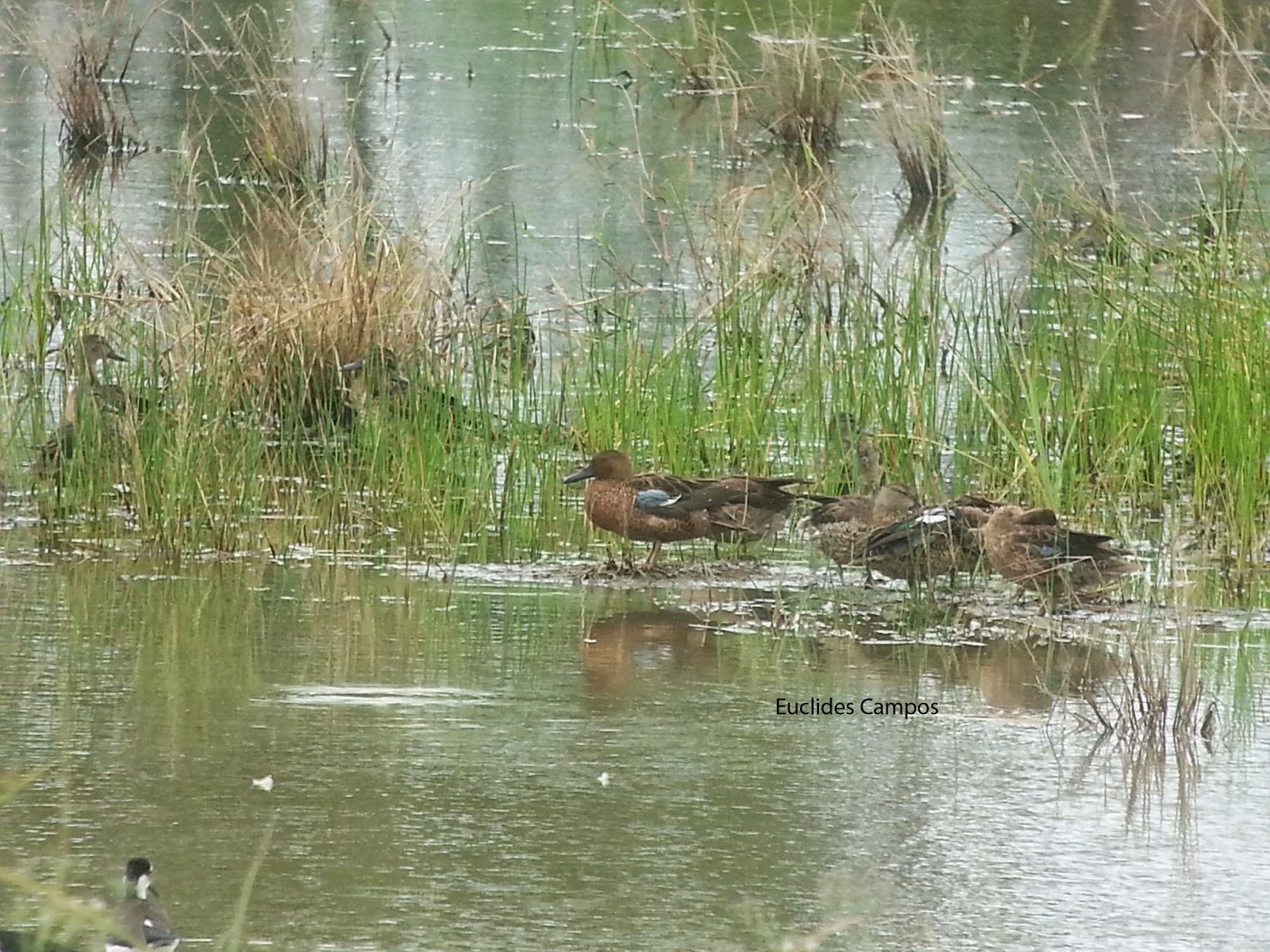
On November 25, a male Cinnamon Teal was seen near Playa Caracol with 13 Lesser Scaups at the shrimp farms located in Punta Chame. The group included Alexis Guevara, Jorge Portillo, Ileana Benitez and myself. Also, a female Ring-necked Duck was at Gorgona.

Patos en Gamboa, un reporte por Rafael Luck

Imagen
Por un reporte realizado en el dia de ayer por nuestro colega, José Tejada, fuimos hoy en la mañana Jan Axel Cubilla y Rafael Luck a Gamboa para encontrarnos con Rafael Lau y Jose Soto del Gamboa Rainforest Resort en el muelle del Resort. Gracias a la cortesía de José Soto en una embarcación vimos muchas aves, entre ellas American Coots y 7 patos: Black-bellied Whistling-Duck, Muscovy Duck, Ring-necked Duck, Lesser Scaup, American Wigeon, Blue-winged Teal y Northern Shoveler.

Migratory ducks galore in Gamboa, a report by José Tejada

Imagen
November 8:  Northern Shoveler, American Wigeon, Ring-necked Duck, Lesser Scaup  (no valid picture of Lesser Scaup as they are all blurry cause I was doing a cruise ship tour and didn't have my spotting scope; so I TOOK THE PICTURES THROUGH MY BINOCULARS!!!!!). All the ducks were located in front and to the right of Los Lagartos restaurant at Gamboa.

Ring-necked Ducks at Las Macanas, a report by Euclides Campos

Imagen
Euclides Campos and Laura Reyes saw a big flock of diving ducks at Las Ciénagas de Las Macanas today. It was made up of many females and few males of Ring-necked Duck and Lesser Scaup . Alfred Raab adds: Just for documentation. On Jan 3 2011 I saw 2 males and 4 female Ring-necked Ducks within a large group of Lesser Scaups (about 30) at Macanas. I did not report them because I could not take a picture, they were too far away.

Ring-necked Duck at Las Macanas

On Sunday, November 28, Delicia, Pedro and Darién Montañez made a midday visit to Las Macanas Marsh. Bird of the day was a male Ring-necked Duck seen from atop the tower while foraging and diving near the floating vegetation at the lake's edge. Its head, chest and back were very dark, contrasting boldly with the very light gray sides. The usual Lesser Scaup, two rafts of 10–20 birds each, were way on the other side of the lake including a few males with their lighter backs showing no contrast with the flanks. The somewhat usual Fulvous Whistling-Ducks were heard and mixed in with the huge flock of Black-bellieds. On our way in, beyond the town of Rincón de Santa María, we had an Aplomado Falcon sunning in the middle of the gravel road, while its consort ate the last bits of a White-tipped Dove.
Imagen
Panama Audubon Society's Rosabel Miró with Ariel Aguirre taught a basic birding course at Las Macanas Marsh from November 30 to December 2 and sent in the following report: Swainson's Hawks: Los días viernes 30 de noviembre, sábado 1 de diciembre y domingo 2 de diciembre Ariel Aguirre, un grupo de estudiantes del curso de observación de aves en Las Macanas y yo observamos a eso de las 5:30 pm varios Gavilanes de Swainson, 12 individuos cada día, posados en los terrenos desmontados de la arrocera Santa Rita. De seguro habían más pero por cuestiones de tiempo no estuvimos en todos los rincones de la finca. Nuestras observaciones incluyeron individuos de diferentes fases: fase clara, fase oscura, fase rufa, juveniles y adultos típicos. Lesser Scaup: Durente la mañana del sábado 1 de diciembre se observó 1 individuo en el área de Las Garzas (Las Macanas). En la mañana del domingo 2 habían alrededor de 105 individuos (machos y hembras) en el área de la torre de observación. En la fo...

Ducks at Las Macanas

The following report from Dodge Engleman was also received deviously: Karl and Rosabel took Lorna and I to Las Macanas 19th and 20th. We picked up the ANAM girl, Marina Gómez, and went out to the lake. The north end, where the tower is, yielded +/- 100 Black-bellied Whistling-Ducks, with at least 5 Fulvous Whistling-Ducks being seen at one time. Seemed like more, but most seen at once was the 5. The thick-leaved shallow water vegetation was pretty obscurring and most good sights were of flying birds: all fulvous with black wings and white rump patch. a couple seen standing revealed the white scalloping on the sides. Bills and feet dark gray, but with all the immature Black-bellieds around, this wasn't a good field mark. In the south branch there was a strung out raft of 250-300 ducks viewed from less than 100 yds with the light at a 90 degree angle. I say less than 100 yds because I could have flown a wedge into them. All were Lesser Scaup with females out-numbering males about 6-1...
